


Sandy Koufax, Justice Ruth Bader Ginsburg & Yom Kippur
October 6, 1965, the first game of the '65 World Series, the Los Angeles Dodgers versus the Minnesota Twins. It's Yom Kippur night at Metropolitan Stadium, 47,797 in attendance. Sandy Koufax, lead pitcher of the LA Dodgers, refuses to play.
Koufax's refusal to pitch on Yom Kippur gained him the respect and admiration of many Jews. His courage gave many Jews the strength to not be ashamed of their Judaism.

Israel’s Secret Weapon
Six F-15 escorts and eight F-16 fighter bombers roared off the runway from Etzion Air Force Base in southern Israel. The air was thick and tense. Prior to take-off, Lt. General Rafael Eitan briefed the pilots. "The alternative is our destruction," he said, displaying unusual emotion.
Israel's intelligence had recently confirmed that Iraq had intentions of producing weapons in their Osirak nuclear facility. The atomic bombs which the Iraqi reactor would be capable of producing from enriched uranium or plutonium could be as fatal as the one that landed on Hiroshima. Realizing the mortal danger facing the people of Israel, the Israeli government decided to attack. At 3:55 PM, while the country innocently bustled about its daily activities, the fighter jets secretly took off.

The Butterfly Effect
On December 29, 1972, American meteorologist Edward Lorenz presented a talk entitled "Predictability: Does the Flap of a Butterfly's Wings in Brazil Set a Tornado in Texas?"
The Butterfly Effect concept, highlighting the possibility that small causes may have momentous effects, eventually became a metaphor used in very diverse contexts, many of them outside the realm of science.

A Soldier on the Ukrainian Front
In Nikolayev, Ukraine, a city where streets are nearly empty due to the precarious security situation, over 200 people of all ages joined the Rosh Hashanah prayers and heard shofar.
Local Chabad emissary, Rabbi Shalom Gottlieb, said that the turnout was “beyond expectations” since “the city is embedded in battle and bombings and the streets are empty. People stay barricaded in their homes and don't venture out. We couldn't have dreamed of this.”

Lost in Translation: Returning Home
In the summer of 1945, as World War II neared its end, the Allied powers issued the Potsdam Declaration, demanding Japan’s unconditional surrender. Reporters pressed Japanese Prime Minister Kantaro Suzuki for a response. He chose the word “mokusatsu.”
In Japanese, mokusatsu is a layered term. It can mean “we withhold comment for now,” a cautious way of buying time. But it can also mean “we treat this with silent contempt.”

It’s all in the head
While Rosh Hashanah is commonly referred to as the “Jewish New Year”, in fact, the precise translation of Rosh Hashanah is actually “Head of the Year”.
We call this holiday “Head of the Year” since these two days stand in the same relationship to the rest of the year as the head does to the body. Just like the head is the source of the life force of the person, and afterwards this life force is distributed to each individual organ of the body, so too Rosh Hashanah has hidden within it all of the life force of the year, and from the holiday it is apportioned to each and every individual day.

The Cry of the Shofar
As we celebrate the upcoming Rosh Hashanah, the head of the new year, we reflect on the past year and anticipate the upcoming year ahead.
Out of all the many Mitzvot and customs that are generally observed, what is considered the most important part of the Holiday?
The Mishnah states, " The mitzvah of the day is with the shofar." There is a parable shared by the Baal Shem Tov (1698-1760) describing the significance of the Shofar.
Google’s gThanks
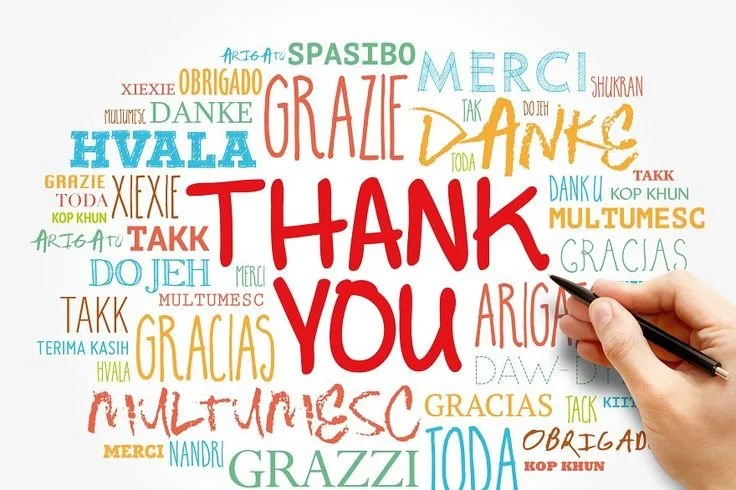
A few years ago, Google created an internal tool called gThanks to make it easy for employees—known as Googlers—to compliment one another. Led by Lazlo Bock, then SVP of People, gThanks allows anyone to tag a colleague and post a “kudos” publicly on a shared feed. Unlike sending a private email, these public acknowledgments celebrate contributions for all to see, making both the giver and the receiver feel recognized. Bock even created what he calls “The Wall of Happy” outside his office, where printed kudos from his team are displayed, increasing visibility and reinforcing the company's values.

First Impressions
Research indicates that first impressions are formed within 7 seconds. In fact, experiments conducted by Princeton researchers even suggest that individuals can make accurate judgments of others within as little as 1/10 of a second.
The 7-Second Rule has become a powerful tool for marketers, salespeople and communicators alike. It's about getting your message across quickly and effectively.

Marrying the Warriors
In March of 2024, ten couples, each with a member serving in the Israel Defense Forces, were united in a simultaneous wedding ceremony in Tel Aviv — one of the largest Jewish weddings ever held in Israel. The event, part of Chabad of Savyon’s “Marrying the Warriors” initiative, took place at the Hangar 11 event hall in Tel Aviv Port, with ten wedding canopies and individual officiating Rabbis, and each couple inviting 100 guests. Following the ceremony, a joint celebration included performances by top Israeli artists.
Many of these soldiers had postponed their weddings due to the war. Couples included some with high security clearance and lone soldiers from abroad.

The Secret to a Happy Marriage
What is the secret to building a successful marriage and a meaningful relationship?
Western civilization has developed exponentially over the last few centuries in many areas such as commerce, medicine, science and technology. Despite all the challenges still facing society today, we are living in a relative prosperous era.

A Lesson from Afghanistan
It is difficult to remain apolitical in today’s charged political climate. Every aspect of society seems to have become a partisan issue. While of course it is important to vote based on our values and beliefs, we must be careful not to fall into the partisan political trap.
One of the things the Jewish people have learned throughout our long history is that we can not put our absolute faith in any particular party or politician. We have seen the worst and the best come from all sides of the political spectrum. While we do our best to establish a stable, safe, and prosperous society, we must put our ultimate faith only in G-d that He will take care of all our needs.

Social Media
What common denominator do social media networks and platforms such as LinkedIn, Facebook, Twitter etc. share which make them so appealing to consumers? While they each have their own unique features and applications, they have all tapped into an essential human disposition: the need for connectivity.
G-d created human beings with a natural desire to connect with fellow human beings. This desire is the driving force behind the formations of communities, country clubs, business networks, peer groups and of course families.

A Ray of Faith in Minneapolis
Before being rushed into emergency surgery for a gunshot wound to the stomach, 13-year-old Endre Gunter asked his surgeon to pause.
“Can you say a prayer with me?” he whispered, according to his aunt, Natalie Davis, who shared the moment on a fundraising page for his medical care.
The surgeon later told the family that not only did Endre survive the operation, but that his courage and faith deeply inspired the entire medical team. “That moment of prayer, and Endre’s resilience, will stay with our family forever,” Davis wrote.

The King is in the Field
At the start of the pandemic, I received a remarkable email from Brandon Steiner, Founder of Steiner Sports Agency. The message began with these words: “Over the past 7 or so years, I have posted over 2,500 blogs. Last week's blog, 'What if you could talk to G-d? My question for all of you is - if you could have a conversation with G-d, what would you say? What questions would you have?’ had the most responses I have ever had!"
It brought to mind the Midrashic statement, “We are believers, the sons of believers”. This is true at all times but especially pertinent during challenging moments.

But Where is G-d?
Eliot Lasky, who was born to Holocaust survivors, grew up in a traditional Jewish community. At the age of 18, he left school and eventually joined the Rolling Stones on their American tour during the height of the hippie era. In this time, Eliot desired to fit in more than anything else.
As time went on, the allure of his new lifestyle faded, and he found himself grappling with profound philosophical questions about faith and life in general. One question in particular kept recurring in his mind: "How can Judaism be right while the rest of the world is wrong?" Upon seeking advice from a friendly rabbi, he was directed to seek counsel from the Rebbe.

The Justice System
Having an established justice system is a bedrock of any civilized society. Without law and order, the world would be a very chaotic and dangerous place. Our Sages state, “pray for the welfare of the government, for were it not for the fear it inspires, every man would swallow his neighbor alive (Ethics of our Fathers 3:2)”.

A Lesson from Rachel Goldberg-Polin
During her heart-wrenching and emotional eulogy for her son Hersh on September 2, 2024, Rachel Goldberg-Polin expressed her extraordinary faith so profoundly:
"I have had a lot of time during the past 332 days to think about my sweet boy, my Hersh. And one thing I keep thinking about is how, out of all the mothers in the world, G-d chose to give Hersh to me.
The Power of Giving: How to Create Wealth
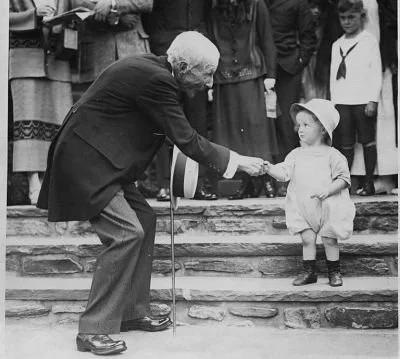
John D. Rockefeller, born in 1839 into a poor family in upstate New York, began working at age 16 as a clerk in Cleveland to support his family. His first wages were just a few dollars a week, yet from that very first paycheck, he set aside 10% for charity, following the Biblical practice of tithing.
Rockefeller later reflected:
“I tithed from my first dollar, and I never would have been able to tithe the first million dollars I made if I had not tithed my first salary of $1.50 per week.”

The Greatest Return on Investment (ROI)
Investors often evaluate the efficiency of an investment by measuring the Return on Investment (ROI). In a broader sense, we make decisions all the time to ascertain where we should invest our time and resources to produce the greatest profit with the least amount of risk. Often, greater opportunities for profit are associated with higher levels of risk as well.
However, there is one type of investment that produces a guaranteed high return with no risk. That is the investment in Tzedaka. I use the Hebrew word Tzedaka, and not charity, because it more accurately portrays the true essence of its definition. Charity connotes performing a nice and generous act, going beyond the call of duty. Tzedaka, however, is derived from the word Tzedek, which means “righteousness”, or doing the right thing. When we give Tzedaka, we are fulfilling our responsibility to G-d who entrusted us with allocating the wealth in the proper manner.