We are the modern-day Maccabees
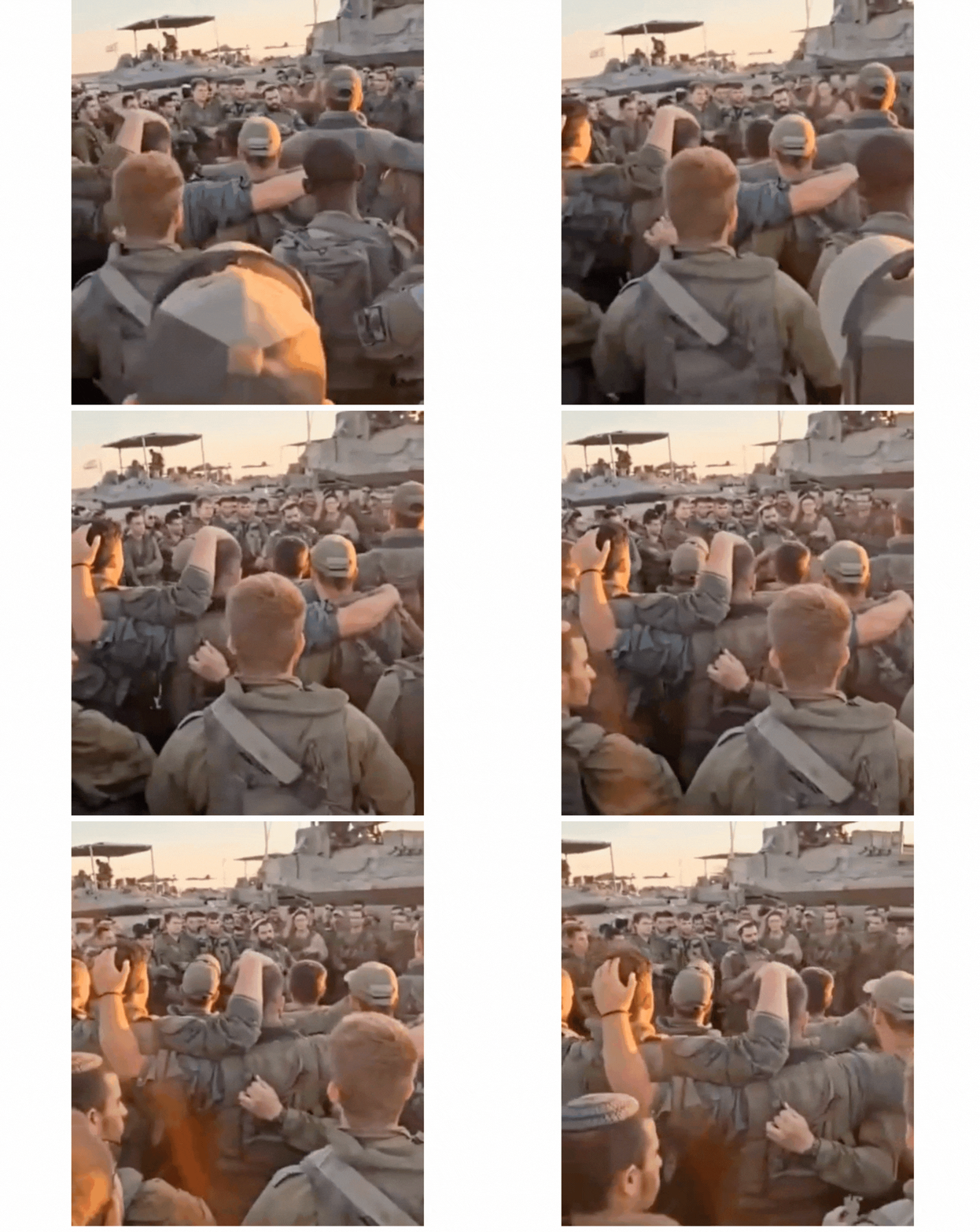
IDF soldiers praying before going out to battle with hands over one another’s heads to serve as makeshift kippot.
In late Oct. 2023, a powerful video spread across the Jewish world. Dozens of IDF soldiers stood in full gear, gathered in a tight circle on the Gaza border. Their commander addressed them:
“We enter with strength and humility — say Shema Yisrael.”
In a remarkable display of unity, soldiers — both religious and non-observant — placed their hands over one another’s heads to serve as makeshift kippot for those without. Together, they cried out:
“Shema Yisrael Hashem Elokeinu Hashem Echad!”
Then they marched toward the staging area, ready not only with weapons and strategy, but with spiritual clarity. They knew who they were, Whom they represented, and what they were fighting for. This site has repeated itself hundreds of times as our brave soldiers entered the battlefield. See here and here for clips.
For many Jews, especially in North America, October 7 was a wake-up call. It shattered the illusion that Jewish identity is optional, that assimilation guarantees safety, or that pride in one’s Judaism should be muted. Suddenly, like those soldiers, many felt compelled to declare: “We are Jews — and we are proud of it.”
One writer captured the sentiment perfectly: “We now recognize what all other nations have known all along: We are different. The Jewish people have a unique mission — and the world is counting on us to fulfill it.”
This moment recalls the story of the Maccabees during Chanukah. Outnumbered and outarmed, this small group of Jewish fighters prevailed because they understood their true strength came from G-d. Their name, “Maccabee,” is an acronym for the Hebrew phrase Mi Kamocha B’elim Hashem — מִי כָמֹכָה בָאֱלִים יה׳, “Who is like You, Hashem?” This declaration of faith was their battle cry, reminding them that faith and identity could overcome even overwhelming odds.
Jacob’s Blueprint for Strength and Faith
Jews make up just 0.2% of the world’s population, yet remain under a constant spotlight. Israel, a country smaller than New Jersey, attracts outsized attention and scrutiny. This week’s Torah portion, Vayishlach, offers a timeless model for navigating the world with pride, security, and spiritual grounding.
Returning home after decades abroad, Jacob learned that his brother Esau was approaching with 400 men, intending to kill him. Jacob’s response combined strategy, faith, and diplomacy: he prepared for battle, he prayed, and he sent gifts to appease his brother. Our Sages teach that this threefold approach exemplifies Jewish survival, then and now.
Before meeting Esau, Jacob sent messengers with a remarkable message: “I have lived (גַּרְתִּי) with Laban…” (Genesis 32:5). Rashi notes that garti has the numerical value of 613, signaling that Jacob kept all mitzvot even while surrounded by wickedness. Why would Esau, a warrior who hated him, care about this? Because strength of identity equals strength of spirit.
Jacob was declaring: “I have not lost myself. I know who I am. I remain faithful. That makes me strong.” His pride in his Jewish identity earned respect — from adversaries, allies, and the world. As Jacob represents the Jewish people, Esau represents the nations. By emphasizing mitzvah observance first, Jacob teaches us to live unapologetically Jewish, with purpose and courage.
From Hiding to Pride: Jewish Life in America
When Jews immigrated to the United States in the late 19th and early 20th centuries, many felt that hiding their identity was necessary for success. Judaism was often kept quiet. That mindset began to change with Rabbi Menachem Mendel Schneerson, the Rebbe. From the beginning of his leadership in 1951, he encouraged Jews to proudly express their faith — affixing mezuzot, lighting Shabbat candles, wearing tefillin, studying Torah, and sending children to Jewish schools.
The Rebbe taught that every mitzvah holds infinite value. Each act transforms the individual soul and impacts the world. Perhaps his most visible initiative was the public Menorah. The Rebbe insisted the world needed to see its message: light, hope, courage, and freedom.
Today, Menorahs rise in iconic locations such as Moscow’s Red Square, Dubai’s Burj Khalifa, Paris’ Eiffel Tower, New York’s Fifth Avenue, and Berlin’s Brandenburg Gate. Every year, American presidents or senior representatives participate in the White House lighting, beginning with President Carter in 1979. These Menorahs symbolize not fear, but confidence, pride, and global respect.
Applying Jacob’s Lessons Today
Jacob’s strategy of gifts, prayer, and preparedness remains especially relevant today. By building bridges and goodwill, we strengthen relationships. By anchoring ourselves in prayer, we maintain clarity and moral purpose. By preparing responsibly, we act courageously and protect our people. Faith and effort go hand in hand, guiding us in Israel, in business, and in daily life.
When confronting antisemitism or hatred, the response is never fear or silence. It is more mitzvot, more pride, more light. Each attack on Jewish identity should inspire a stronger, brighter flame.
A Time of Opportunity
As Chanukah approaches, the message is clear: do not hide, illuminate; do not shrink, stand tall; do not fear, add light. Encourage friends, family, and colleagues to light the Menorah and spread goodness. The world needs Jewish light now more than ever.
Jacob’s timeless guide teaches us to lead with heart, head, and hand — prayer, strategy, and action — living proudly as Jews and shining our divine mission.
The story of Jacob and Esau mirrors the Jewish people's historical struggles, expulsions, and migrations. After thousands of years of refining the world, our responsibility is to stand proudly and work with our allies globally to combat evil by embracing our Jewish identity and mission and usher in a time of peace and prosperity for all nations on earth with the coming of Moshiach now!