Light at the End of the Tunnel
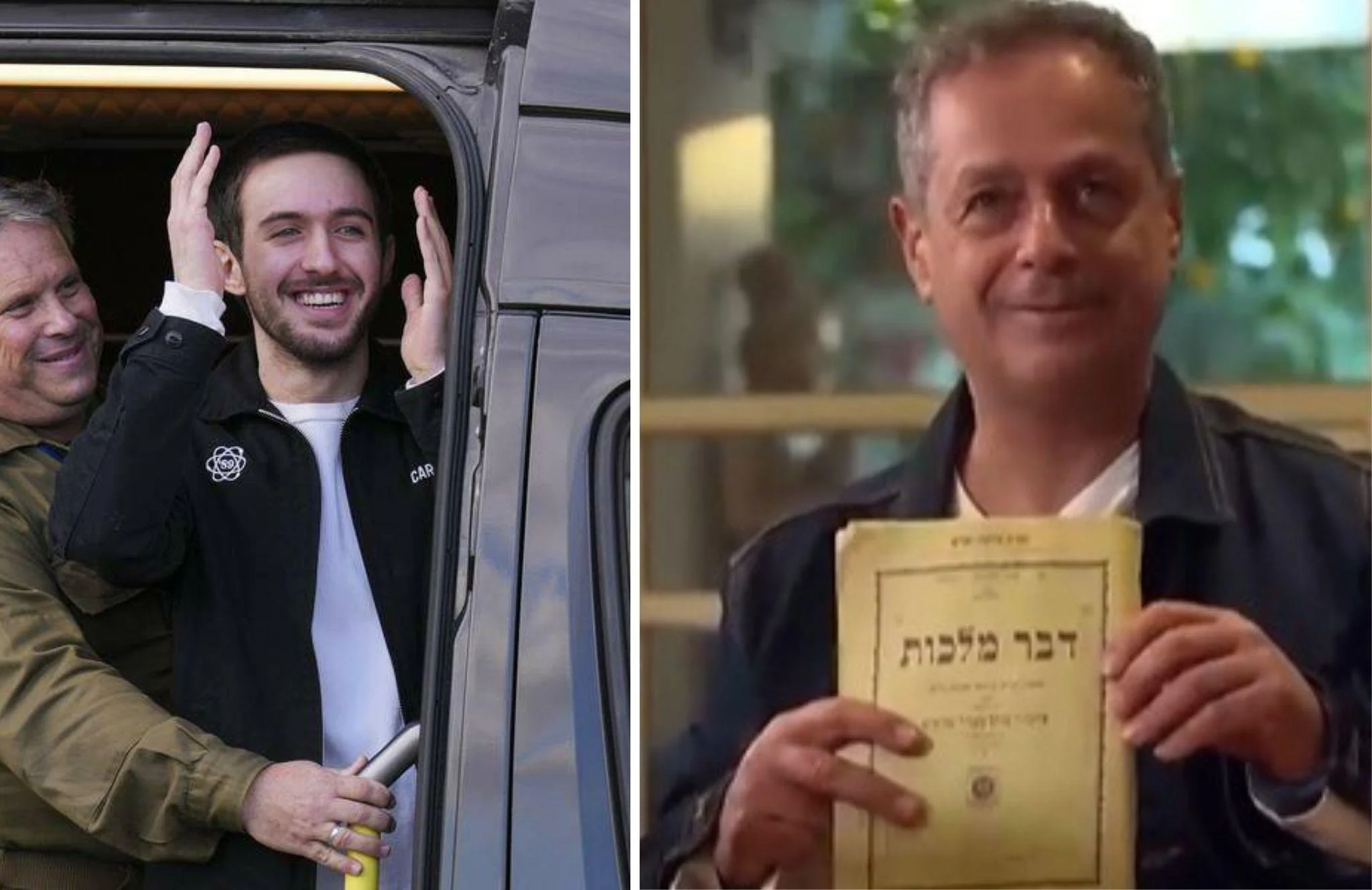
Left: Omer Shemtov upon his freedom | Right: Omer's father holding up the Torah booklet which sustained him during captivity
Omer Shem Tov was just 20 years old when he was kidnapped during the brutal October 7th terror attack on Israel. Though raised in a mostly traditional home, he had never been deeply observant. Still, he carried a quiet belief in G-d, one that would become his lifeline during the 505 agonizing days that followed.
Isolated, hungry, and often trapped in total darkness, Omer began speaking to G-d. He started making blessings on the meager food he received and resolved to keep kosher as much as possible.
Only one week into captivity, he made a personal vow:
If he ever walked free again, he would put on tefillin and pray every day.
On Friday, the first Shabbat in captivity, Omer said, “Back home, we make Kiddush every week. I need wine for Kiddush. Believe it or not, a Hamas terrorist showed up and gave us a mini bottle of grape juice, a special delivery from G-d."
But Omer was already thinking ahead. “What if we get stuck here for five years? This bottle has got to last us a very long time.”
“The bottle lasted half a year. I made Kiddush with it dozens of times,” Omer related upon his release after 505 days in captivity. “The grape juice never spoiled, the bottle never emptied. It was my personal version of the Chanukah miracle of the oil flask.”
A Divine Message in Disguise
One day, his captors brought him reading material they had found, suspecting it might contain Israeli military codes. They asked Omer to translate it.
To his astonishment, it wasn’t military intelligence at all—it was an issue of Dvar Malchut, the weekly Chabad booklet containing Torah teachings, insights from the Rebbe, Talmud, and Chassidic wisdom. Nearly 250 pages of spiritual nourishment which an IDF soldier had left behind.
Omer pleaded to keep it, offering to cook, clean, anything. Incredibly, they agreed.
That particular issue included commentary on this week's Torah portion about Joseph who was betrayed by his brothers, thrown into a pit, sold into slavery, and imprisoned, yet who maintained unwavering faith and ultimately rose to become viceroy of Egypt.
Omer saw his own reflection in Joseph’s journey. He, too, was in a pit—physically and spiritually. And he, too, believed he would rise.
Returning With Purpose
Now 22, Omer has returned home. He puts on tefillin every morning, as he promised in captivity. He recently completed a speaking tour across the United States, sharing his story with tens of thousands and inspiring Jewish communities worldwide.
When asked how he preserved his faith and optimism, his message remains the same:
“G-d puts us exactly where we’re meant to be. Even when life feels unbearable, we are never truly alone. Every moment has purpose.”
Joseph’s Lesson: Purpose in Every Moment
I this week's Torah portion, Vayeishev, we learn about Joseph's suffering, betrayal, slavery, and imprisonment. Yet Joseph did not sink into despair. He remained sensitive to others and attuned to his divine mission.
When he noticed two of Pharaoh’s imprisoned courtiers looking troubled, he asked, “Why do you appear downcast today?” (Genesis 40:7)
That simple act of compassion—reaching beyond his own pain—set off a chain of events that elevated him to leadership and ultimately saved the entire region from famine.
Judaism teaches that even one small act of kindness can have immeasurable impact. Much like the “butterfly effect” described in science, a single mitzvah can ripple outward and change the world.
The Power of a Single Light
As we light the Chanukah menorah this coming week, we remember that it takes only one small flame to pierce great darkness.
When we bring light to others and to our own souls—through kindness, encouragement, and mitzvot—we awaken them to become lights themselves, creating an ever-expanding circle of goodness.
Judaism teaches that the world was created with a purpose: to reveal its inner goodness, elevate it through acts of holiness, and prepare it for the era of redemption.
As Maimonides says:
“A person should see the world as equally balanced between merit and sin… If he performs even one mitzvah, he tips the balance for himself and for the entire world, bringing deliverance and salvation.”