Let My People Go
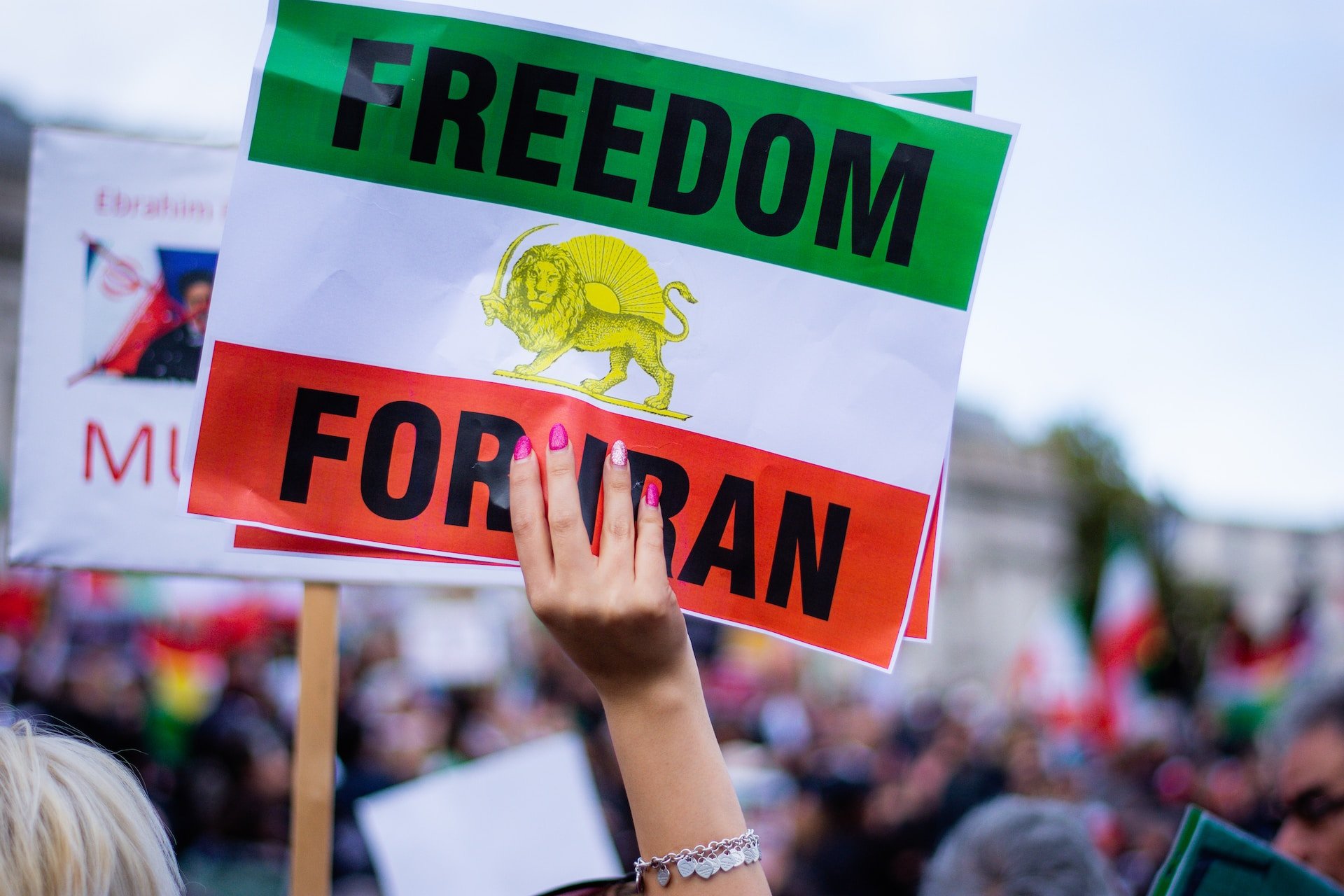
As Iranians have taken to the streets in some of the largest protests in recent years—and as the brutal Iranian regime responds with ruthless crackdowns on its own citizens—it is difficult not to reflect on this week’s Torah portion. In Parshat Va’eira, G-d sends Moses to confront Pharaoh with a simple yet revolutionary demand: “Let My people go.”
Pharaoh refuses. What follows are the Ten Plagues.
At first glance, these plagues appear to be punishment for Egypt’s enslavement and torture of the Jewish people. Yet the Torah makes clear that something far deeper is taking place. G-d declares that the purpose of these events is so that “they shall know that I am the L-rd.”
Rabbi Don Isaac Abarbanel (1437–1508), the great biblical commentator, who also served as the financier and treasurer to King Afonso V of Portugal, explains that the plagues were not merely retribution, but a systematic dismantling of Egyptian ideology. They were designed to confront and transform a civilization that believed in its own absolute power and self-sufficiency. As the verse states: “And the Egyptians shall know that I am the L-rd when I stretch out My hand over Egypt and take the children of Israel out from among them” (Exodus 7:5).
Egypt’s economy and identity were built around the Nile River. With virtually no rainfall, the Egyptians did not look heavenward for sustenance; instead, they worshipped the Nile itself. The first plague—turning the Nile into blood—directly confronted this false belief, forcing Egypt to recognize a higher authority. Each subsequent plague further stripped away their illusion of control, exposing the fragility of human power when divorced from G-d.
Pharaoh’s own words reveal his worldview: “I do not know the L-rd,” and “The river is mine, and I made it.” These statements denied Divine involvement and replaced it with arrogance and self-worship. The plagues came to shatter that arrogance and openly reveal G-dliness in the world.
Against this backdrop, recent events in the Middle East take on deeper meaning. A senior Iranian official recently claimed that Israel employed “supernatural” methods during the 12-day war that severely weakened Iran’s nuclear program and eliminated key military and scientific figures. While such statements may sound dramatic, they unintentionally echo an ancient truth.
Over the past two years, the people of Israel have witnessed an extraordinary series of events that defy conventional explanation. From the interception of nearly all incoming missiles fired from Iran, Hezbollah, Hamas, and the Houthis, to the pager operation and rapid dismantling of enemy infrastructure, to precise and daring operations against terrorist leadership—miracles have become so frequent that they risk being mistaken for nature.
While we deeply honor the courage, skill, and sacrifice of the IDF, we must also humbly acknowledge that human intelligence and judgment are limited—as tragically revealed by the failures preceding October 7.
True confidence and security come only when we place our trust in G-d.
Judaism teaches that what we call “nature” is simply a consistent pattern of miracles. The sun rising each morning, the breath filling our lungs, the birth of a child—these are no less miraculous than the splitting of the sea. We fail to recognize them only because they occur regularly.
For someone struggling to breathe, G-d forbid, a single unlabored breath is an open miracle.
The Torah trains us to look beyond appearances and recognize the Divine spark within every aspect of creation. When we do so, gratitude replaces arrogance. When we fail to do so, our achievements feed the ego, leading to a dangerous illusion of self-sufficiency.
The plagues teach us that nothing happens by chance. Behind every event or news headline—whether dramatic or subtle—stands Divine providence guiding history toward its purpose. The difference between Egypt then and our world today is not whether G-d is involved, but how visibly His hand is revealed.
Belief in one G-d means more than rejecting idolatry; it means rejecting the notion that any force operates independently. Nature, science, technology, markets, and medicine are powerful tools—but they possess no power of their own. As Maimonides explains in The Guide for the Perplexed, nature is “like an ax in the hand of the one who wields it.”
We are obligated to act responsibly—to work hard, to defend ourselves, and to use the tools G-d places in our hands. But we must never confuse the tool with the Source.
It is deeply moving to see IDF soldiers returning from battle singing songs of gratitude and praise to G-d. These young soldiers understand that while they fight with discipline, courage, and advanced technology, true protection comes from Above.
During the long and painful ordeal of the hostages, we cried out, “Let my people go,” while much of the world stood by in silence. G-d heard our prayers and brought many of them home through open miracles. We continue to pray for the return of the body of Ran Gvili, Hy”d and for all those still yearning for freedom both in Iran and elsewhere in the world.
In truth, there are many forms of captivity. Not all chains bind the body; some bind the soul. Each of us seeks freedom—from ego, temptation, peer pressure, and the confines that limit us. We yearn for true liberation.
The mission of the Jewish people is to reveal G-dliness within the physical world—to elevate every aspect of creation to serve a higher purpose. In doing so, we prepare the world for Redemption, when all nations will live in peace and unity, recognizing one Creator. In fact, the Talmud (Yoma 10a) and its commentators teaches that in the future, at the time of Moshiach's arrival, the nation of Persia (Iran) will fall and be transformed for the good. Let us pray that it happens speedily. As the prophet declares: “For then I will transform the peoples to a pure language, that they may all call upon the Name of the L-rd, to serve Him together” (Zephaniah 3:9).
May we strengthen our faith, increase in mitzvot, pray for the safety of our brothers and sisters in Israel and around the world—and merit the coming of Moshiach, now.