


The Justice System
Having an established justice system is a bedrock of any civilized society. Without law and order, the world would be a very chaotic and dangerous place. Our Sages state, “pray for the welfare of the government, for were it not for the fear it inspires, every man would swallow his neighbor alive (Ethics of our Fathers 3:2)”.

A Lesson from Rachel Goldberg-Polin
During her heart-wrenching and emotional eulogy for her son Hersh on September 2, 2024, Rachel Goldberg-Polin expressed her extraordinary faith so profoundly:
"I have had a lot of time during the past 332 days to think about my sweet boy, my Hersh. And one thing I keep thinking about is how, out of all the mothers in the world, G-d chose to give Hersh to me.
The Power of Giving: How to Create Wealth
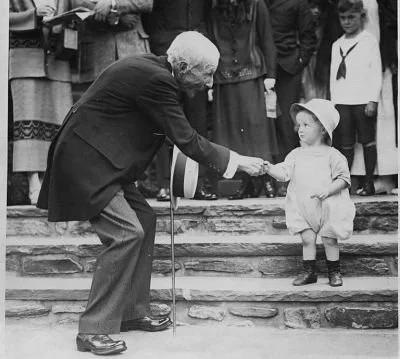
John D. Rockefeller, born in 1839 into a poor family in upstate New York, began working at age 16 as a clerk in Cleveland to support his family. His first wages were just a few dollars a week, yet from that very first paycheck, he set aside 10% for charity, following the Biblical practice of tithing.
Rockefeller later reflected:
“I tithed from my first dollar, and I never would have been able to tithe the first million dollars I made if I had not tithed my first salary of $1.50 per week.”

The Greatest Return on Investment (ROI)
Investors often evaluate the efficiency of an investment by measuring the Return on Investment (ROI). In a broader sense, we make decisions all the time to ascertain where we should invest our time and resources to produce the greatest profit with the least amount of risk. Often, greater opportunities for profit are associated with higher levels of risk as well.
However, there is one type of investment that produces a guaranteed high return with no risk. That is the investment in Tzedaka. I use the Hebrew word Tzedaka, and not charity, because it more accurately portrays the true essence of its definition. Charity connotes performing a nice and generous act, going beyond the call of duty. Tzedaka, however, is derived from the word Tzedek, which means “righteousness”, or doing the right thing. When we give Tzedaka, we are fulfilling our responsibility to G-d who entrusted us with allocating the wealth in the proper manner.

Rights or Responsibilities
At the turn of the 18th Century, there were many new philosophies and movements that were gaining popularity and capturing the minds and hearts of millions of people across the globe. They challenged the autocratic system of governance and power which was prevalent at that time and introduced new ideas that sought to bring an end to inequality, poverty, and suffering.
From Harvard to Claremont: A Powerful Display of Jewish Pride
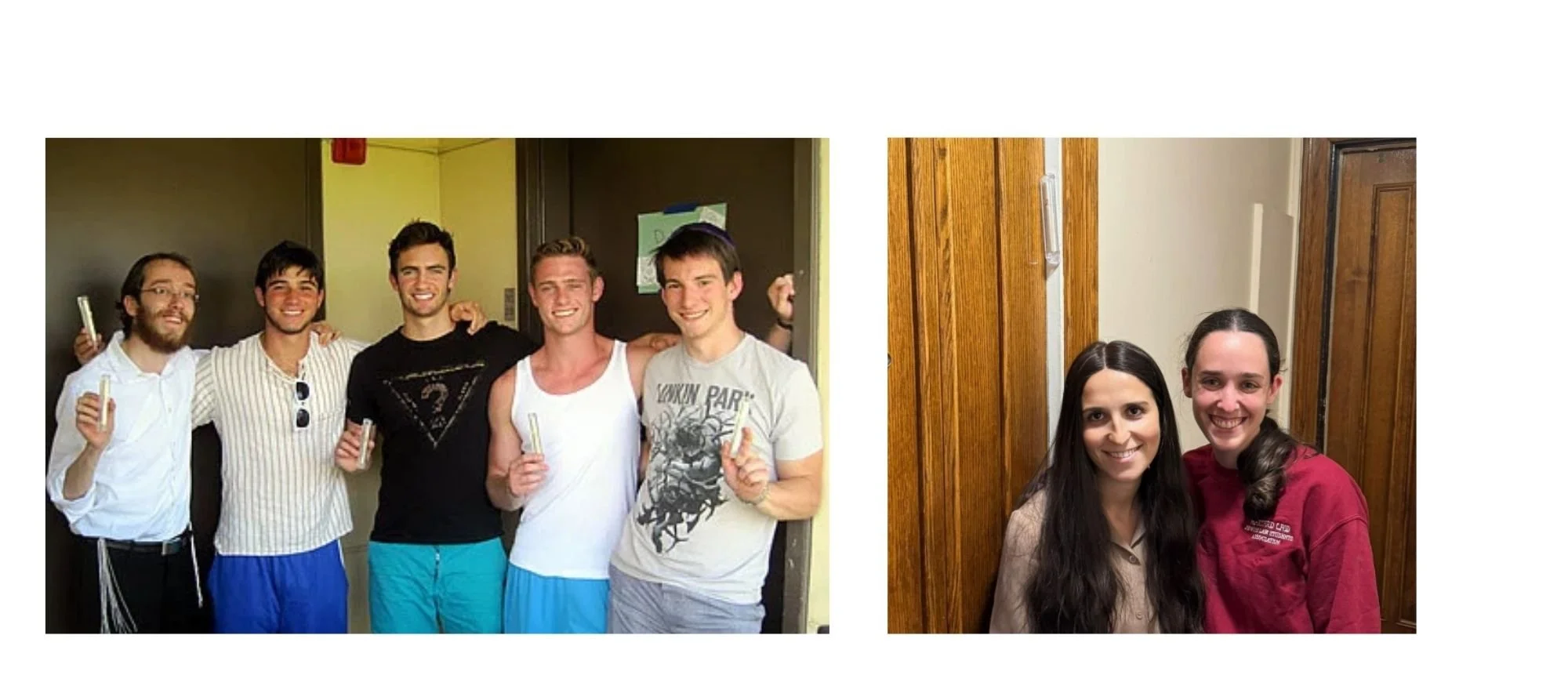
As a freshman at Harvard, Sarah Silverman was stunned to discover that her newly affixed mezuzah was missing from her dorm room doorpost.
“I noticed something was gone,” she recalled. “In the place where my mezuzah had been so tightly secured, only a bit of sticky adhesive remained.”
Her heart sank. After she and her roommate swept the entire dorm floor in search of it, the morning’s excitement turned to an awful anxiety. The mezuzah was nowhere to be found.

The Goal of Education
What is the ultimate goal of education?
A child or young adult may attend school or a place of higher education to receive valuable knowledge or attain a skill in a specific field. That information may then be used to advance a career and provide them with a future livelihood.
However, there is another aspect to education which far outweighs the above mentioned objective. The ultimate goal of education is to instill in our youth good morals, faith, values, fine character and purpose. This type of education is not only provided by academic institutions but rather something which begins from the moment a child is conceived and continues on for the rest of their lives.

The True Meaning of Higher Education
During the congressional hearing on anti-Semitism on December 5th, 2023, multiple Ivy League university presidents were asked a simple question: "Does calling for the genocide of Jews violate the university's code of conduct?" Their responses were shockingly ambiguous: "It depends on context."

The Secret To Our Survival
Recently, I came across a beautiful article published in the Wall Street Journal. The article was titled “The Shul That Rose From the Ashes” in which the author, Josh Nass, describes his grandfather's childhood in Malakhovka, a suburb of Moscow, and eventual emigration to America in 1972 after surviving the horrible persecutions of pogroms, the Holocaust, and the communist government's attempt to stifle Jewish observance.
A Call to Arms: The Six Day War to Today
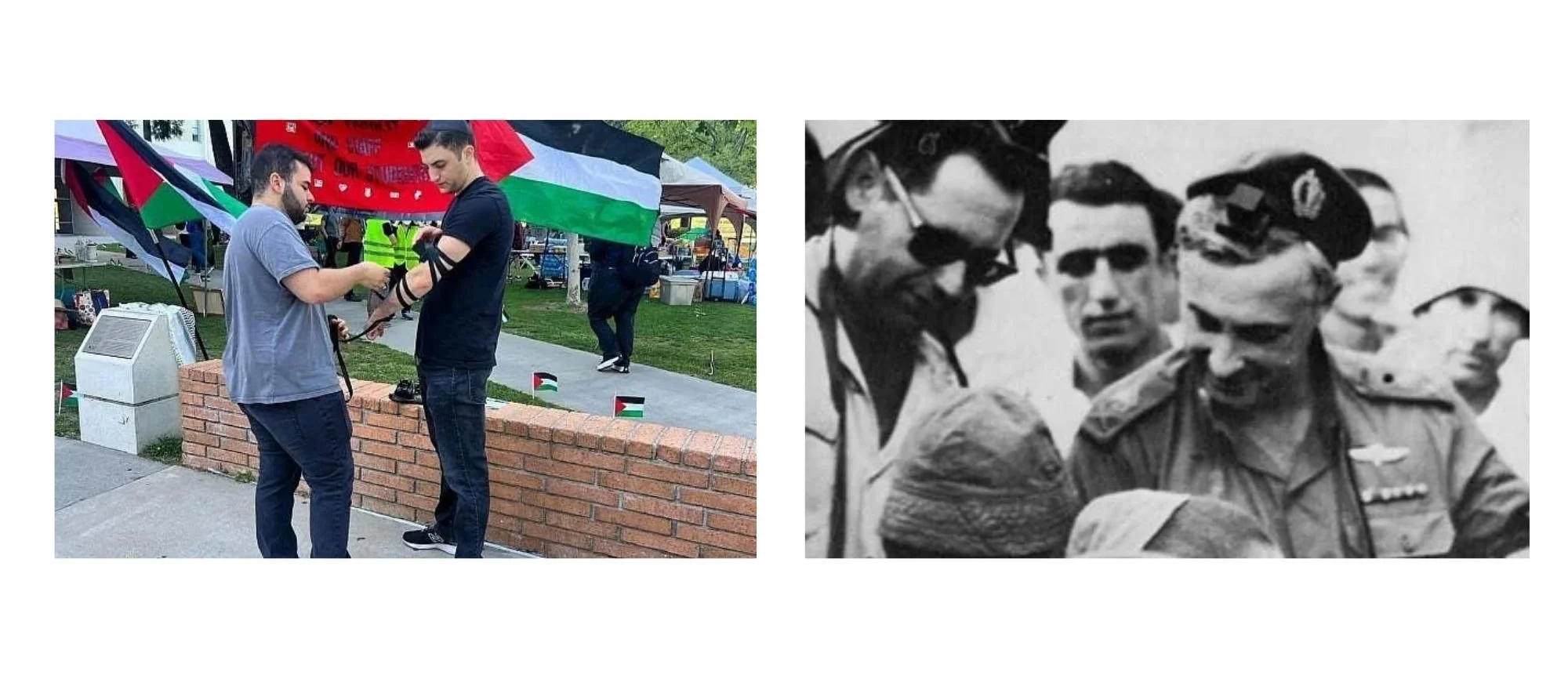
In the tense weeks before the Six-Day War in June 1967, Israel seemed to stand on the edge of destruction. On May 22, Egyptian President Gamal Abdel Nasser closed the Straits of Tiran, cutting off Israel’s southern shipping route—an act internationally recognized as a declaration of war. Within days, Egypt, Syria, and Jordan signed military pacts, amassing nearly half a million soldiers, thousands of tanks, and hundreds of warplanes along Israel’s borders. The Soviet Union supplied them with advanced weaponry. France, Israel’s main arms supplier, abruptly imposed an arms embargo. The United States announced it would remain neutral.

The Ultimate Security
There is a fascinating story recounted in the Jerusalem Talmud: “The last Parthian king Artavan once sent a gift of a very precious pearl to Rabbi Yehudah Hanassi, asking to be sent something of equal value in return. Rabbi Yehudah Hanassi sent a mezuzah in return. When the king received the mezuzah he was dumbfounded that Rabbi Yehudah could consider this little piece of parchment as an equivalent to the precious pearl. He expressed his sentiments in no uncertain terms. Thereupon Rabbi Yehudah explained to the king that they had different sets of values, hence the king’s amazement. He went on to say that whereas the king’s gift was something that he, Rabbi Yehudah, would constantly have to guard against theft, etc., his own gift to the king was something that would guard over the king and protect him.”

A Mezuzah in Cuba
About 10 years ago, as a Rabbinical student, I was assigned to travel along with a friend to Cuba in order to assist the small Jewish community there with their High Holiday needs.
Our responsibilities included leading services, hosting Kosher meals, and providing much needed basic necessities for the impoverished local community there. In addition, we were to assist local Jewish tourists and visiting business people with celebrating the holidays.

Feel at Home
Have you ever wondered what is the most important part of a home? Is it the roof and exterior walls which provide shelter from outside elements? Or is it the interior design and aesthetics which impact the function and ambiance of the home? Perhaps it's the furniture and appliances which enable us to make use of the home itself?
While all those aspects serve an important purpose, they do not define the ultimate nature of a home. For one can find shelter or even enjoy quality hospitality and luxurious amenities while staying at a hotel as well, but, of course it's still not quite the same as one's home.

AI & Visionary Thinking
In the 1980s and 1990s, most of the AI world had moved on from neural networks. These systems—designed to mimic the brain's structure—were dismissed as inefficient, shallow, and impractical. The dominant trend was symbolic AI: logic-based systems engineered to follow programmed rules. It was neat, controllable, and explainable—but it couldn't learn or adapt.
Geoffrey Hinton thought differently. He believed that the brain-like structure of neural networks held the key to true intelligence. While others abandoned them, he quietly refined his ideas, waiting for computing power and data to catch up. In 2012, that moment arrived.

Effective Communication
A couple days ago, I was speaking with an acquaintance who shared the following challenge he was facing:
After overseeing a merger with another law firm, he was encountering some resistance from a few of his attorneys. Although they were receiving a raise, better working conditions, and job security, they were still unhappy with the new arrangements.
There may be many facets to the quandary, but perhaps one way to address the issue is through effective communication.

Make it Relevant
I recently heard a young entrepreneur share his experiences and struggles which he faced while launching his startup.
He had invested a significant amount of seed money to create a great product, but, for some reason, he had failed to attract enough interest from potential customers to remain sustainable.

A Visionary Mindset
On December 17, 1903, the Wright brothers revolutionized the modern world with the first successful airplane flight, embodying the power of visionary thinking. While most were focused on improving the speed and efficiency of existing modes of transportation, the Wright brothers, like other visionaries, saw beyond the limits of their time, imagining a future where humans could fly.
Yiddish Humor
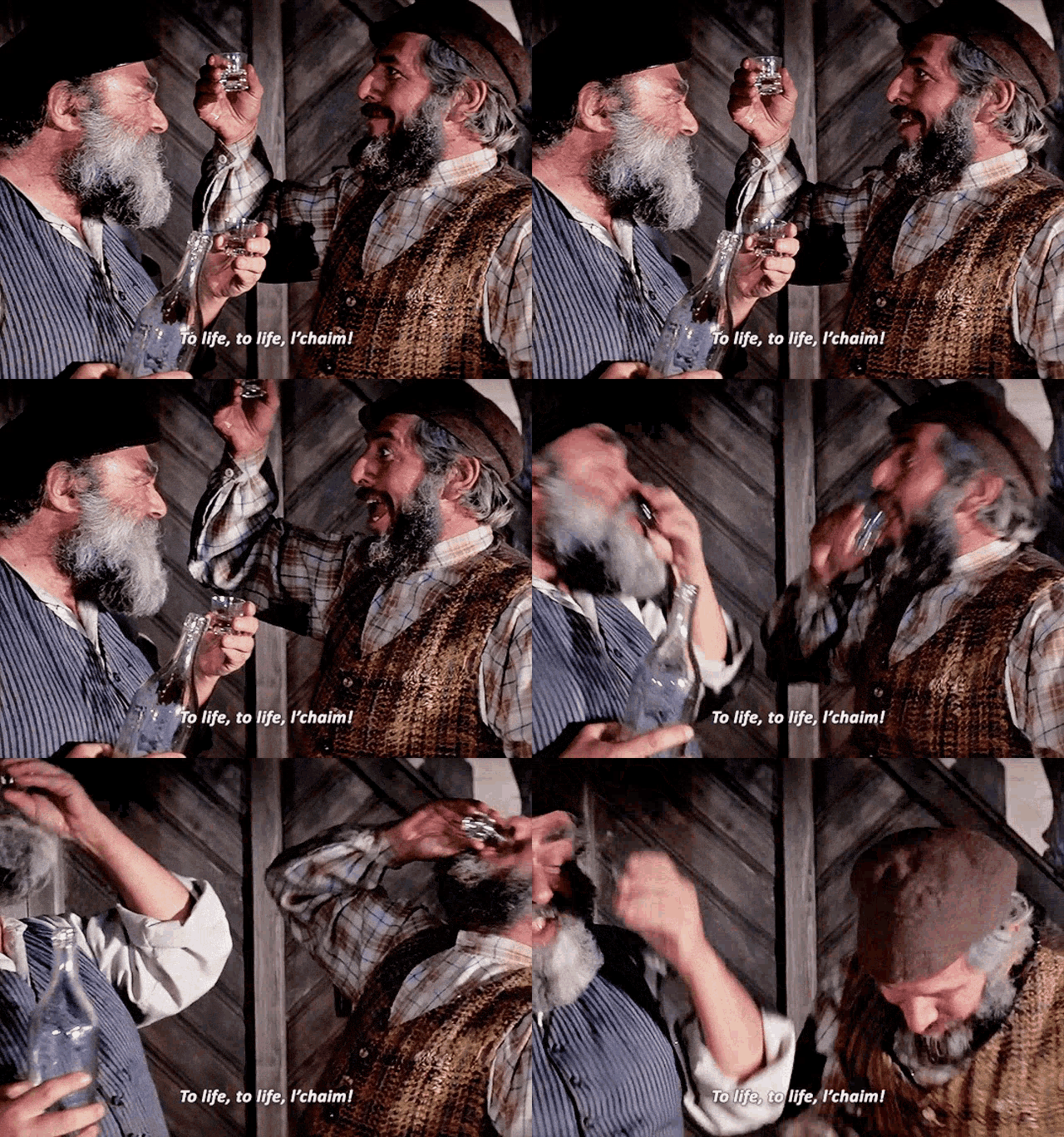
In the early 20th century, the Borscht Belt in the Catskills was a popular summer vacation destination for Jewish immigrants looking to escape the stress and density of city life.
Many famous Jewish comedians and entertainers got started with their careers performing at hotels and resorts in the area delighting their audiences with Yiddish humor especially highlighting stereotypical Jewish traits.
There is something about the Yiddish language that captures and expresses so much of our Jewish history, culture, and Weltanschauung.

Apple vs. Blackberry: A Deeper Truth About Life
Not long ago, BlackBerry dominated the smartphone market. Its signature physical keyboard and strong security made it the choice for corporate leaders and government officials worldwide. Then, in 2007, Apple introduced the iPhone—sleek, simple, and revolutionary. In just a few years, Apple transformed the tech world, while BlackBerry faded away. Why?
BlackBerry struggled because it failed to adapt. It clung to past successes and resisted change. Apple, by contrast, embraced innovation while staying true to its core values of creativity, simplicity, and user experience. This story is more than a business case study—it offers timeless lessons about growth, humility, and perseverance on the path to our own “promised land.”

The NYT Millennium Edition
For many years in the 90’s there was a small advertisement that ran every Friday on the bottom corner of the front page of the New York Times. It read, “Jewish Women: Shabbat candle lighting time this Friday is ____pm.” It not only served as a reminder of this eternal mitzvah, but it also expressed Jewish pride.
The advertisement ceased after the sponsor ended it, but it reappeared once.