Will Money be Relevant in an Era of Abundance?
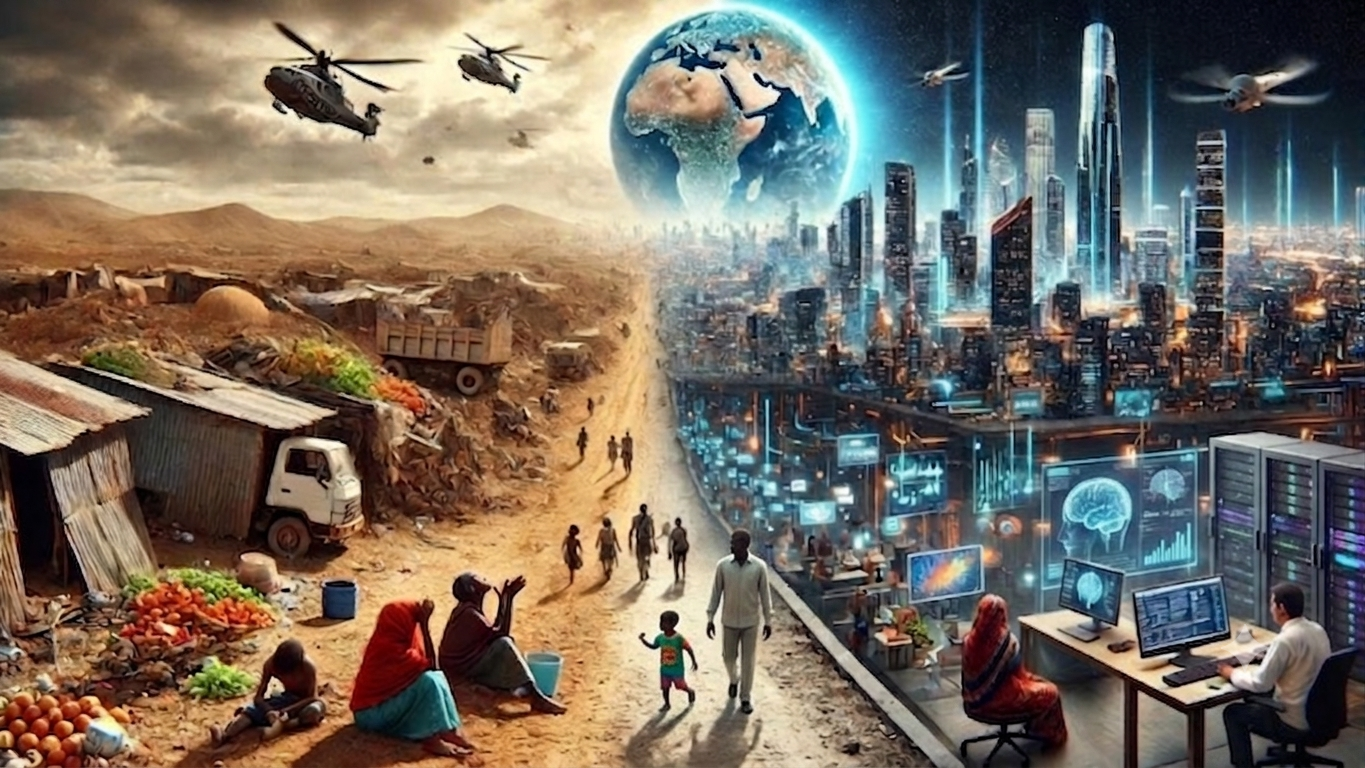
Prominent technology leaders predict that within the next decade, artificial intelligence and robotics will make money far less important, and perhaps irrelevant. Their vision is one of unprecedented abundance: machines producing more goods and services than humanity could ever consume. Retirement savings may become unnecessary. Work may become optional. The greatest challenge, they argue, will no longer be survival, but finding meaning and purpose.
Questions abound. Will the benefits be shared equally, or will human greed deepen inequality? How will governments adapt? What will hold society together on the road to such a future?
Judaism has been describing a remarkably similar vision for thousands of years, and, unlike today's futurists, it also explains what gives life meaning in a world of abundance.
The prophets envisioned an age when war, famine, and scarcity would vanish. We pray for this future every day. It is the era of Moshiach.
As Maimonides writes: "In that time there will be neither famine nor war, neither jealousy nor competition, for goodness will flow in abundance and all delights will be as common as dust. The occupation of the entire world will be solely to know G-d."
What Is Money, Really?
If money is nothing more than a means of acquiring material things, then in a world of limitless abundance it loses much of its significance.
But Judaism teaches that money is far more than purchasing power. It represents our time, effort, talent, and potential. Its true value depends not on how much we accumulate, but on what we do with it.
Consider a single dollar. You can buy a chocolate bar, eat it, and its value disappears the moment it is consumed. Or you can give that same dollar to tzedakah. In that instant, something extraordinary happens: a physical object becomes part of an eternal mitzvah. Because a mitzvah connects us to the Infinite, its spiritual impact never expires. Years from now, the chocolate will be long forgotten. The act of kindness will not.
The Rebbe taught, as recorded in Hayom Yom, that when Moshiach comes, people will look back with longing at the unique opportunities they once had to perform mitzvot in a world where doing good required genuine sacrifice and effort.
In a future where material abundance is taken for granted, what will endure is not what we spent on ourselves, but what we invested in others.
More Than Charity
The Hebrew word tzedakah is commonly translated as "charity," but its root is tzedek — justice. It is not merely an act of generosity; it is a moral responsibility.
In this week's Torah portion, Re'eh, the Torah commands: "If there will be among you a needy person… you shall not harden your heart or close your hand. Rather, you shall surely open your hand to him and provide what he needs" (Deuteronomy 15:7–8).
The Torah commands giving at least 10% of one’s net income, as stated “a tithe shall you tithe” (Deuteronomy 14:22). The Talmud notes the repetition and remarkable linguistic connection: the Hebrew word asser ("tithe") shares its root with titasher ("become wealthy"), teaching that generosity is itself a source of wealth — not a cost, but an investment.
The sages go even further, declaring that tzedakah is equivalent to all other mitzvot combined. As the Tanya explains, the money we earn embodies our time, energy, intellect, and effort. When we give it away for a holy purpose, we elevate every part of ourselves that went into earning it.
The Only Wealth That Lasts
AI may transform the economy. It may reduce scarcity, reshape work, and redefine wealth. But it cannot replace the human capacity to choose goodness. Technology may produce abundance, but it cannot create purpose. It cannot transform a dollar into eternity.
That remains our choice.
The Talmud teaches: "Great is tzedakah, for it brings the redemption closer."
As we anticipate a future of abundance, the greatest investment we can make today is not in accumulating more, but in giving more.
Because in the end, the most valuable currency is not what we keep.
It is what we give away.