National Shabbat: From the Sweatshops to the White House
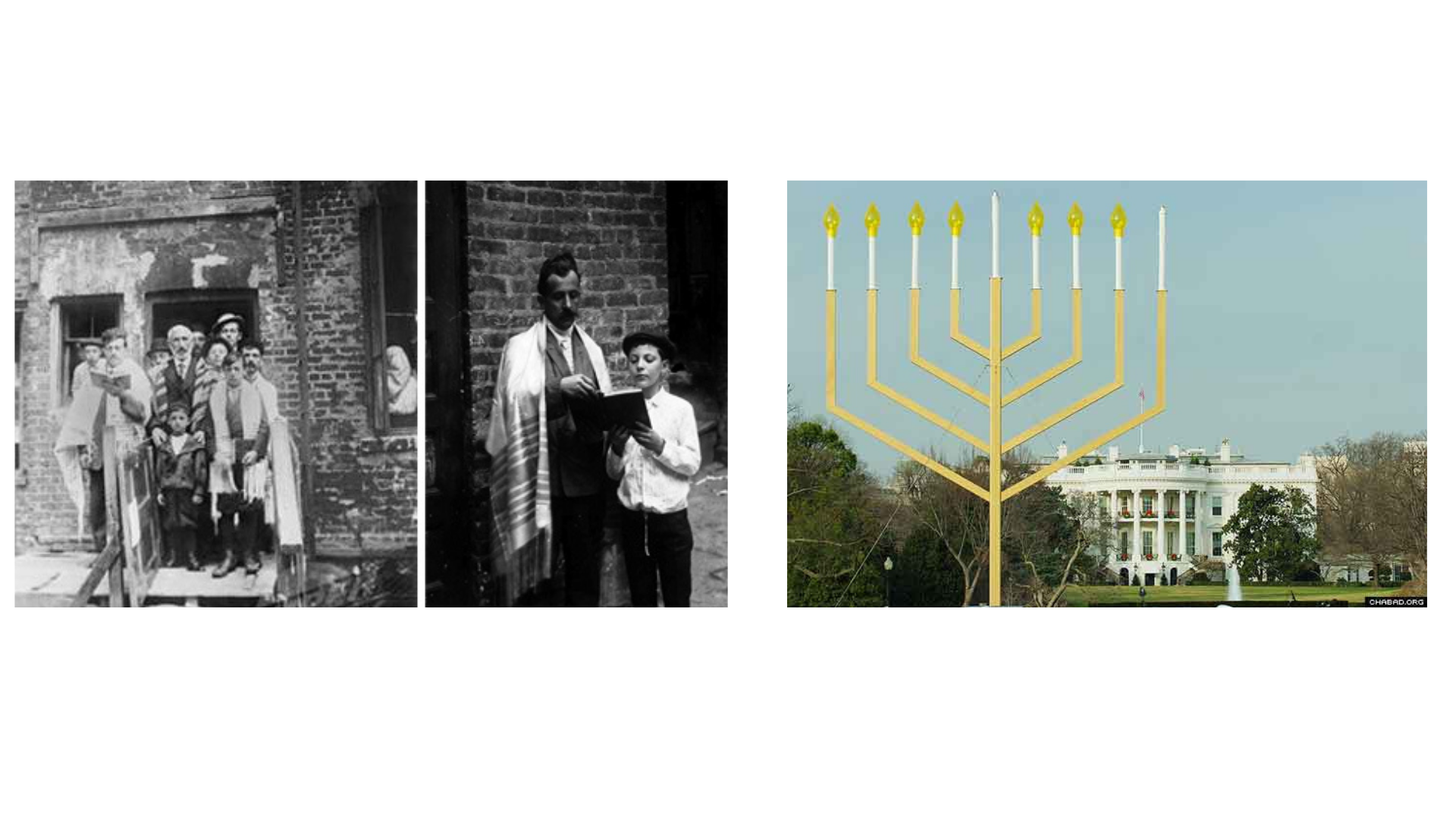
The journey of the Jewish people in America is a story defined by a "grueling spiritual paradox." For the immigrants arriving at Ellis Island in the early 1900s, the Goldene Medina offered refuge from the bloody pogroms of Eastern Europe, yet it presented a new, quieter threat: an economic structure that demanded the soul in exchange for bread.
The Era of the "Sabbath Fired"
In the teeming tenements of the Lower East Side, the struggle to keep Shabbos was a weekly crisis of survival. In that era, the six-day work week was the law of the land, and Saturday was the busiest day for factories and sweatshops.
For the observant Jew, Friday afternoon was a time of immense dread. The "Friday Afternoon Ritual" became a staple of immigrant life: a worker would approach his foreman to explain that he could not work the next day. The response was almost mechanical: "If you don't come in Saturday, don't come in Monday."
This created a heartbreaking cycle of being "Sabbath fired." Thousands of Jews spent their Saturday nights in prayer and their Monday mornings pounding the pavement, searching for a new employer who hadn't fired them yet.
The Cost of Continuity
In his book This Is My God (1959), Pulitzer Prize-winning author Herman Wouk described this world where religious endurance required material sacrifice.
He argued that the strength of the American Jewish community was built on the back of those early sacrifices. He often remarked that he was profoundly impressed by his father’s generation because they sacrificed material comfort—the very thing they came to America to find—for the sake of religious continuity.
They traded wealth for holiness, a sacrifice that eventually helped birth the five-day work week we enjoy today. Jewish labor leaders argued that a worker deserved a day for the spirit and a day for rest; a "weekend" was not a luxury, but a hard-won victory for the right to remain Jewish.
While Henry Ford is the name most commonly credited for the five-day work week, the very first documented five-day work week in America was actually established in 1908 at a New England cotton mill. It was created specifically to accommodate Jewish immigrants.
A National Jubilee: "Shabbat 250"
Today, the landscape of the American Sabbath has undergone a miraculous transformation. We have moved from an era where a Jew was fired for keeping Shabbos to a moment where the President of the United States—the leader of the free world—calls on the nation to embrace it.
Earlier this week, in a historic proclamation for Jewish American Heritage Month, the White House has called for a "National Sabbath" as part of the celebration of America’s 250th anniversary:
“In special honor of 250 glorious years of American independence and on the weekend of Rededicate 250—a national jubilee of prayer, praise, and thanksgiving—Jewish Americans are encouraged to observe a national Sabbath. From sundown on May 15 to nightfall on May 16, friends, families, and communities of all backgrounds may come together in gratitude for our great nation. This day will recognize the sacred Jewish tradition of setting aside time for rest, reflection, and gratitude to the Almighty.”
It is a stunning reversal of history: the very government that once oversaw a Saturday-centric economy now recognizes the sacred Jewish tradition of setting aside time for the Almighty.
The Sabbatical Year
This modern encouragement mirrors the eternal message found in this week’s Torah portion, Behar. The Torah introduces the Mitzvah of Shemittah—the Sabbatical year:
"But in the seventh year, the land shall have a complete rest, a Sabbath to the Lord; you shall not sow your field, nor shall you prune your vineyard." (Leviticus 25:4)
To the rational mind, this command is extremely challenging. How does a nation of farmers survive while leaving their fields fallow for an entire year? The Torah addresses this anxiety directly:
"And if you should say, 'What will we eat in the seventh year?' ... [Know then, that] I will command My blessing for you in the sixth year, and it will yield produce for three years." (Leviticus 25:20-21)
Sustenance Through Faith
The lesson of Shemittah is the same lesson learned by the immigrants in the 1900s: G-d is the true source of our livelihood. While the laws of the Sabbatical year apply specifically to the Land of Israel, its spirit is universal.
When we take off work for Shabbos or holidays, when we prioritize Torah study over the "rat-race" mentality, or when we give 10% of our earnings to Tzedakah, we are practicing a "mini-Shemittah." We are letting go of the illusion of ultimate control and trusting that if we do what G-d requires, He will provide—not just spiritually, but materially.
The Eternal Shabbat
The Talmud (Shabbat 118b) teaches that if the Jewish people kept just two Shabbats, the Redemption would arrive. We first observed Shabbat as a unified nation upon leaving Egypt; today, as we celebrate America’s 250th anniversary, we have a historic opportunity to do so again.
Let us join together for this National Shabbat to unplug and connect with G-d, family, and community. By honoring this sacred rest, we can finally usher in the "Eternal Sabbath & Sabbatical Year"—the era of Moshiach and universal peace and prosperity for all nations.