


Who Invented AI?
It's hard not to be amazed by the rapid advancements in artificial intelligence (AI) over the past few years. Many people feel a mix of wonder, excitement, and uncertainty about what the future holds. Many experts predict that AI will usher in a golden age of abundance, where goods and services become so affordable that a high standard of living will be accessible to all. Others, however, express concern about AI's potential to disrupt the job market, affecting hundreds of millions of workers worldwide.
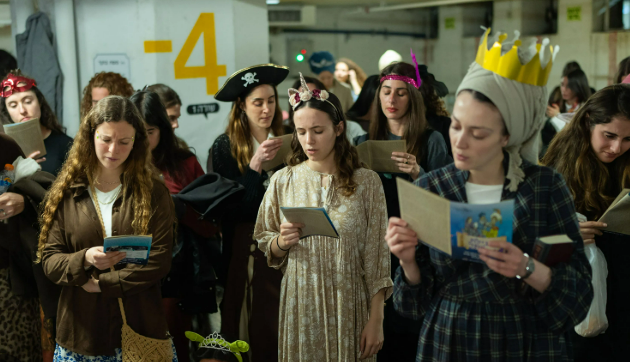
Finding Community in a Bomb Shelter
A few hours before the start of Purim this week, I received a call from a member of the JBN community. He and his family were in Israel for an extended stay and suddenly found themselves in the midst of war. Air raid sirens had been sounding regularly, forcing them in and out of bomb shelters throughout the day.
Because of the security situation, he was unable to go to synagogue to hear the reading of the Megillah. Yet Purim had already begun in Israel, and he was determined not to miss the mitzvah.

Israel: Post October 7
Uvda, described by Variety as “the local equivalent to CBS News' 60 Minutes”, ran a segment that featured United Hatzalah members Avi and Avi who had been celebrating Shabbat and the holiday with their families and community when they first heard the news of the horrific attacks on October 7th. Following the Torah's injunction that saving a life supersedes all other laws, they jumped into their ambulance and started heading south.

Priorities: Business or Clients?
Providing good customer service is an important part of any successful business. However, to what extent should a company be ready to accommodate a client's request or perhaps absorb a financial loss? What if the loss came as a result of extraneous circumstances such as a pandemic which is beyond the control of the business or the client?

Priorities
With only so much time in our day and with a finite amount of resources and energy, we are often faced with the challenge of prioritizing and choosing between various responsibilities and opportunities to engage with at any given moment.
This may express itself in finding the right work-life balance such as choosing between staying an extra hour in the office or returning home to spend quality time with our children before they go to bed. Or it may manifest itself in how we choose to invest our philanthropic dollars or community engagement.

Unconditional Love
A little while ago, after being disciplined for misbehavior, my son innocently asked me, “Do you still love me?”
It’s easy to dismiss children’s words as just blabber. Though, often enough, the most profound ideas and insights can be gleaned from the expressions and refreshing questions of small children.
By asking “Do you still love me”, he was essentially wondering if a parent's love to a child is unconditional or if it is conditional on good behavior.
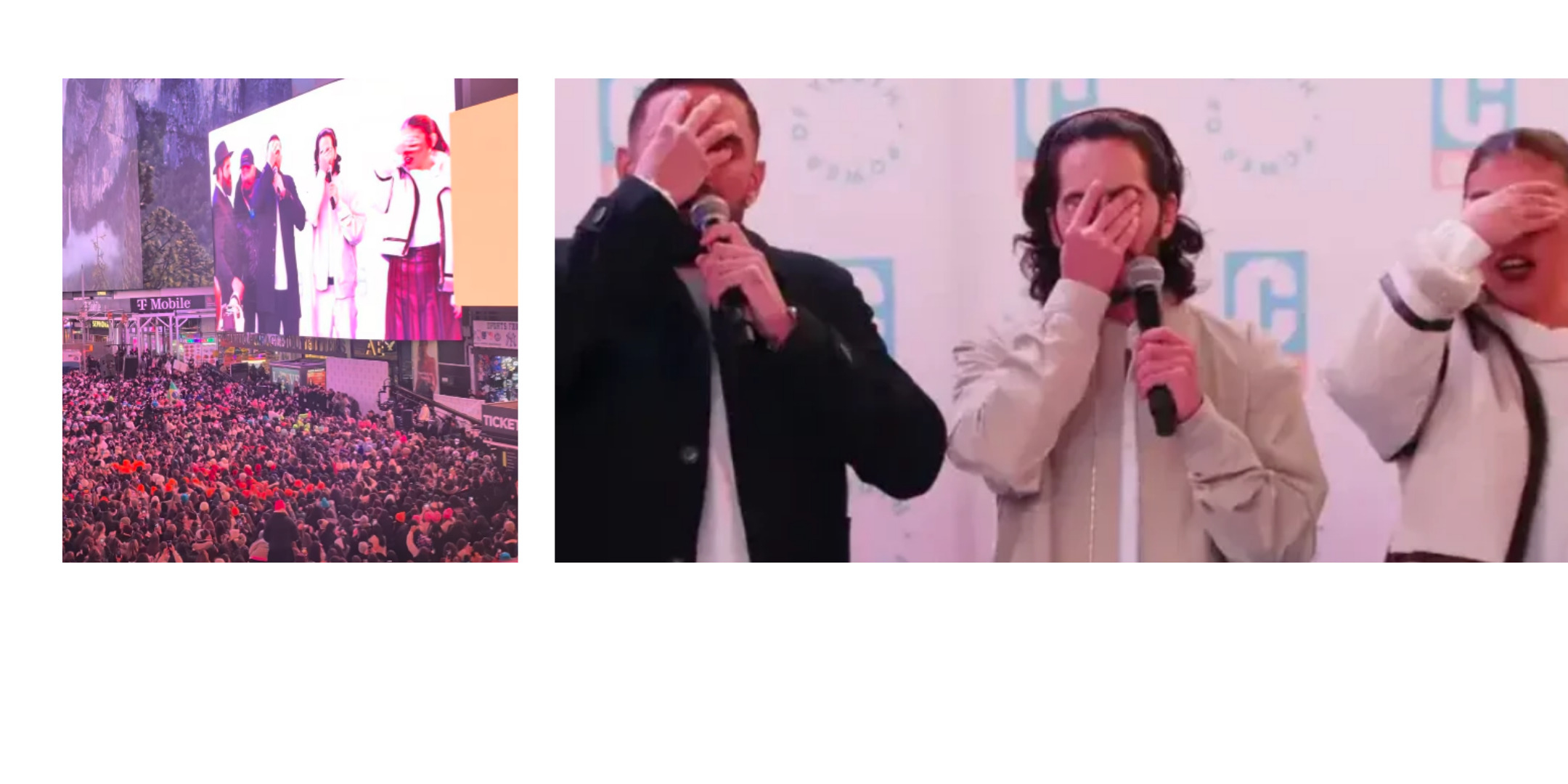
The Power of Transformation: From Gaza to Times Square
When Segev Kalfon was held hostage in Gaza, he witnessed fellow captives paraded on stages before evil crowds in cruel propaganda spectacles. In the suffocating darkness of the tunnels, he made a quiet vow: if he were ever put up on that stage, he would use it not for humiliation — but for faith. He dreamed of declaring Shema Yisrael, Judaism’s timeless proclamation of unity, before the very savagery that sought to break him.
By the time he was released, the staged ceremonies had stopped. The captors had removed the platform.
So he found another one.

Celebrating Life
On Purim we celebrate one of the most joyous times of the year- the holiday of Purim.
It commemorates the (Divinely orchestrated) salvation of the Jewish people in the ancient Persian empire from Haman’s plot “to destroy, kill and annihilate all the Jews, young and old, infants and women, in a single day.” Literally “lots” in ancient Persian, Purim was so named since Haman had thrown lots to determine when he would carry out his diabolical scheme, as recorded in the Megillah (book of Esther).

Chosen for What?
In a well-known quote from "Fiddler on the Roof," Tevye gazes heavenward and ponders on his many misfortunes, "Dear G-d…I know, I know. We are Your chosen people. But, once in a while, can't You choose someone else?"
For good or for worse, the nations of the world have always been obsessed with the Jewish people. Despite Israel's best efforts to prove that it is just like any other country, the world will always treat Israel differently. Indeed, what does it mean to be the Chosen People?

How Generosity Creates Wealth
Studies conducted at Harvard Business School have identified a striking correlation between charitable giving and increased personal income. Economist Arthur Brooks describes generosity as creating a “virtuous cycle,” in which giving money away often precedes higher subsequent earnings.
The research proves that charity is not merely an expense; it is actually an investment in one's own wealth.

Think Big
Several years ago, renowned Radio & TV Host personality Dave Ramsey addressed a diverse audience of thousands at a convention and shared insights from a book that he felt had changed his life.
The book, "Thou Shall Prosper" by Rabbi Daniel Lapin, delves into how the Jewish people have had the tendency to prosper way beyond their population size in every setting they have ever been in throughout history. The Jewish people today, constituting only 3% of the American population, remarkably make up 67% of the Forbes 400 list.

Reciprocity
Throughout all stages in life and the various relationships we develop, we tend to be both a recipient and a provider.
Children are dependent on their parents for food, shelter and basic necessities, while they give boundless joy, Nachas, and love to their parents in return.
Educators and mentors guide and greatly impact the lives of their students by instilling within them exemplary morals and imparting them with invaluable wisdom and inspiration. In turn, students give their teachers and mentors a sense of fulfillment while helping them crystalize and better understand their subject matters.

The Paradox of Prosperity: Are We Happier?
By almost every material metric, we are living in an era of unprecedented prosperity. Our grandparents could scarcely have imagined the technology, medical breakthroughs, and comforts we now take for granted. Yet recent research reveals a startling paradox: despite being wealthier and more comfortable than ever, our collective happiness is in sharp decline.

No Free Lunch?
How often do we encounter an apparent freebie only to find out about the hidden fees or many strings attached. As the popular saying goes, “there is no such thing as a free lunch".
It is only human and natural for us to have the “what's in it for me” attitude when conducting business. However, Judaism teaches us that we should strive to develop a selfless approach while interacting with one another and to help others wholeheartedly without any preconditions or expectations of receiving something in return.

What Makes You Happy?
Israel is ranked as the fourth happiest country in the world, according to the UN-sponsored World Happiness Report. The obvious question arises: how can Israel, the only civilized nation under constant mortal danger, maintain such happiness? Despite ongoing threats from Iran and its terrorist proxies like Hamas and Hezbollah, along with facing global boycotts and condemnations, what are the sources of this happiness?

A Moment of Silence
Depicted over the gallery doors of the House Chamber in the U.S. Capitol are 23 historical figures noted for their work in establishing the principles that underlie American law. Moses, is in the center, facing forward, with 11 portraits on either side facing right and left toward him. Of course, this is in recognition of the fact that the foundations of a moral and ethical society must be predicated on a belief in G-d as transmitted to Moses, the Jewish people and, by extension, the whole world at Mount Sinai.

An Objective Truth
Elie Wiesel, an author, Nobel Prize laureate, and renowned Holocaust survivor, once recounted his visit to Brooklyn in the early '60s to meet with the Rebbe, M.M. Schneerson.
Wiesel posed a poignant question to the Rebbe, asking, "How can you believe in G-d after Auschwitz?" The Rebbe responded by looking at him in silence, his hands resting on the table. After a moment, he shed a tear and softly replied, "In whom do you expect me to believe after Auschwitz? In man?"

The First Request of a Freed Hostage
After 491 days in Hamas captivity, Eli Sharabi was released this weekend in a terribly weakened and emaciated state, to the devastating news that his wife and daughters were murdered in the October 7 attacks.
One of his first requests was a spiritual one—a pair of tefillin—and his family's Chabad rabbi was ready to help.

Moltbook AI & the Role of Humans
With the recent launch of Moltbook AI — an internet forum created specifically for artificial intelligence agents rather than human users — the world is witnessing a technological development that feels both fascinating and unsettling. On this platform, AI agents can post, comment, and interact with one another while humans largely remain observers.
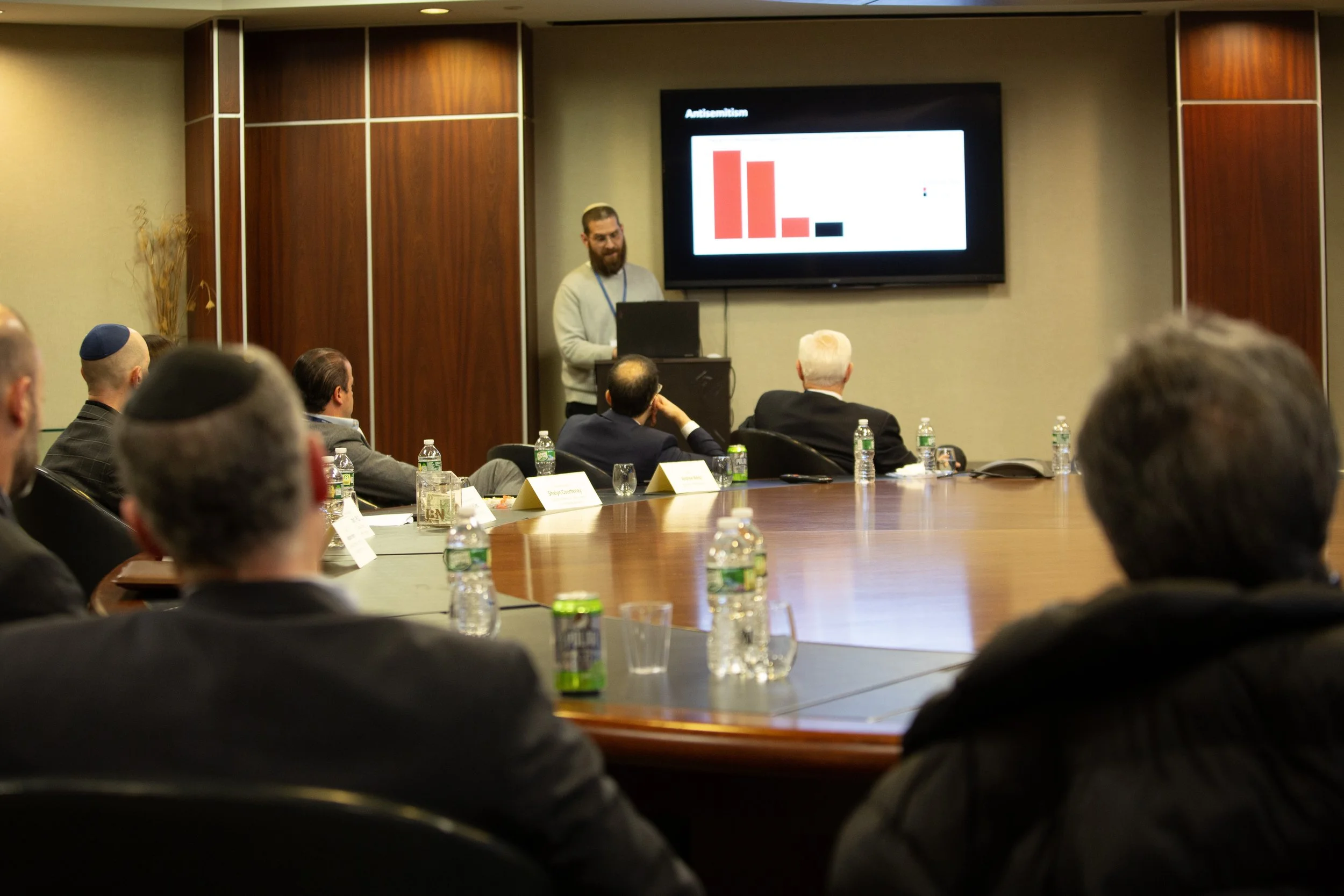
The Surprising Key to Combating Anti-Semitism
At a recent JBN Executive Roundtable, we had the privilege of hosting Dr. Joel Finkelstein, Ph.D., Chief Science Officer and co-founder of the Network Contagion Research Institute (NCRI). Dr. Finkelstein’s work pioneers new methods in the cyber social sciences to confront some of the most serious threats of the information age. His research offers a clarifying lens on how antisemitism, hate, and extremism spread; why many well-intended efforts to combat them are failing; and what actually works instead.